
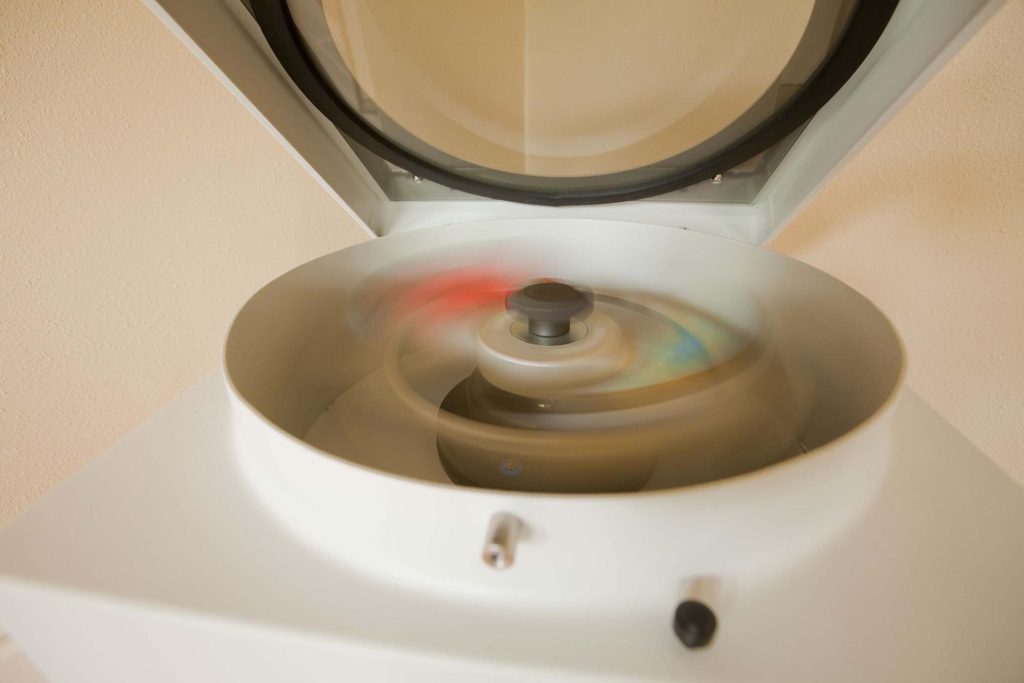
Platelets are critical to the body’s capacity for wound healing and tissue regeneration. Platelets contain both growth factors and bioactive proteins which have been studied to modulate inflammation, reduce pain, and stimulate tissue healing and repair. Platelet Rich Plasma (PRP) is an in-office laboratory procedure that concentrates a portion of a patient’s whole blood–thereby creating a super physiologic dose of platelets to help with pain, inflammation and healing for a variety of musculoskeletal conditions. PRP has been used in clinical settings for repairing tissues in the musculoskeletal system, including bone, cartilage, intervertebral disc, tendons, joints, and in the nervous system
There is a lot of variability in PRP preparation methods. Factors such as the amount of blood drawn, centrifugation time, and number of spins can all impact the composition of the final product. Tissue repair depends on the platelet dose. It has been found that the total number of available platelets is a critical measure in evaluating the effectiveness of your platelet rich plasma treatment.
As of July 2026, Dr. Patrick Chapman, has exclusively transitioned to using Apex Biologix XCell PRP system to harvest platelet rich plasma. This FDA-approved harvesting system is known to have an 83% platelet capture rate, delivering greater than 10+ billion platelets per dose (Bioengineering 2026). This can help to heal many tendon, ligament, and joint problems.
Dr. Chapman also utilizes diagnostic ultrasound to aid in diagnosis and interventional needle guidance. High frequency imaging with ultrasound allows for the physician to visualize nerves, tendons, ligaments, and joints in real time. Using the ultrasound to guide the needle to the damaged tissue greatly improves accuracy and outcomes.
Prolotherapy
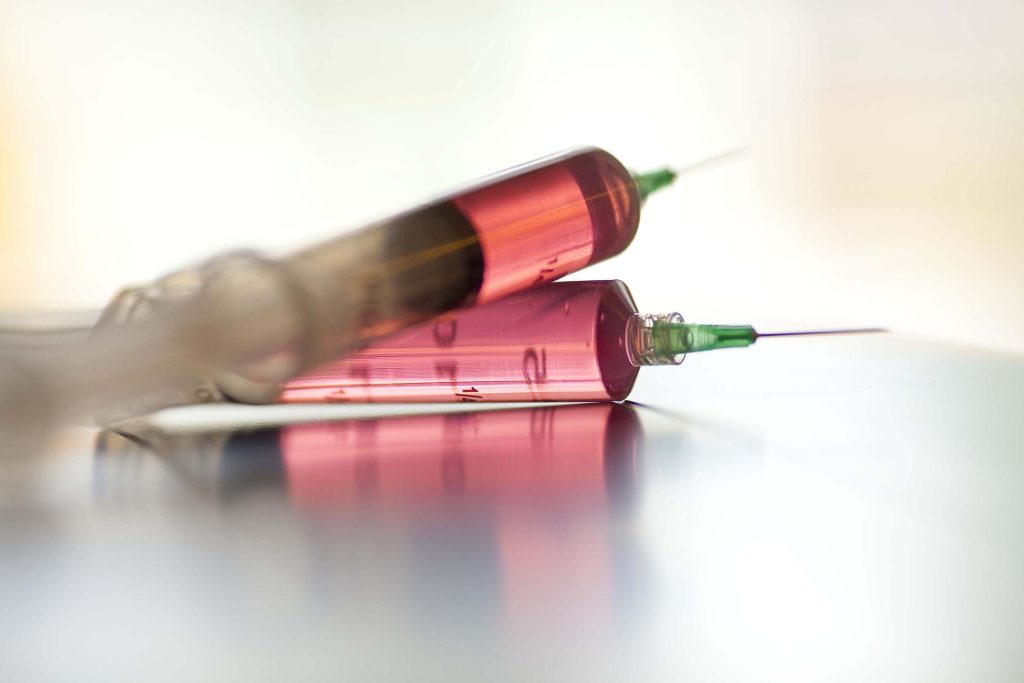
Prolotherapy, also known as regenerative injection therapy, is an excellent treatment option for musculoskeletal (MSK) disorders and dysfunction of all types. Prolotherapy is the process of injecting a solution of dextrose, procaine, and Vitamin B12 into injured tissues. Common areas of treatment include tendons, ligaments, muscle fascia and joint capsules. The purpose of these injections is to strengthen injured areas by producing new, healthy connective tissue. In fact, prolotherapy is the only non-surgical treatment proven to rebuild and strengthen connective tissue. This tissue regneration (or cell proliferation) is mediated by various growth factors.
Used with permission from Ross Hauser, MD. Prolo Your Pain Away! 2007. Caring Medical Regenerative Medicine Clinics.
Most chronic joint pain is due to a weakness in ligaments and tendons that surround the joint. Prolotherapy corrects this underlying weakness. It takes, on average, three to six treatments to effectively cure most chronic pain. In the more advanced cases, treatment with PRP (platelet rich plasma) may be needed for optimal results. We have seen great results in the following conditions:
- ligament and tendon weakness resulting in joint instability or pain
- chronic MSK disorders unresponsive to more conservative treatment
- sports injuries
- Motor vehicle accidents
- falls
- repetitive vigorous spinal manipulation
- osteoarthritis
References
Sussman W, Fitzpatrick J, Demers A, Everts PA. Optimized Platelet Rich Plasma Preparations for a Consistently High Platelet Capture Rate, Bioformulation Flexibility and Red Blood Cell Reduction Using a Single Spin Device. Bioengineering. 2026, 13(7), 780. https://doi.org/10.3390/bioengineering13070780
Current Reviews in Musculoskeletal Medicine
Everts PA, Lana JF, Onishi K, Buford D, Peng J, Mahmood A, et al. Angiogenesis and tissue repair depend on platelet dosing and Bioformulation Strategies following Orthobiological platelet-rich plasma procedures: a narrative review. Biomedicines. 2023;11(7):1922.
Everts, P.; Onishi, K.; Jayaram, P.; Lana, J.F.; Mautner, K. Platelet-Rich Plasma: New Performance Understandings and Therapeutic Considerations in 2020. Int. J. Mol. Sci. 2020, 21, 7794.
Alsousou, J.; Ali, A.; Willett, K.; Harrison, P. The role of platelet-rich plasma in tissue regeneration. Platelets 2012, 24, 173–182.
Xie, X.; Zhang, C.; Tuan, R.S. Biology of platelet-rich plasma and its clinical application in cartilage repair. Thromb. Haemost. 2014, 16, 204–215.
Flaumenhaft, R.; Sharda, A. Platelet Secretion. In Platelets; Michelson, A.D., Ed.; Academic Press: Cambridge, MA, USA, 2019; pp. 349–370.
Rabago D, et al: Prolotherapy in primary care practice. Prim Care. 2010 Mar;37(1):65-80. http://www.ncbi.nlm.nih.gov/pubmed/20188998
Topol GA, Reeves KD: Regenerative injection of elite athletes with career-altering chronic groin pain who fail conservative treatment: a consecutive case series. Am J Phys Med Rehabil. 2008 Nov;87(11):890-902. http://www.ncbi.nlm.nih.gov/pubmed/18688199
Miller MR, Mathews RS, Reeves KD: Treatment of painful advanced internal lumbar disc derangement with intradiscal injection of hypertonic dextrose. Pain Physician. 2006 Apr;9(2):115-21. http://www.ncbi.nlm.nih.gov/pubmed/16703971
Hakala RV: Prolotherapy (proliferation therapy) in the treatment of TMJ. Cranio. 2005 Oct;23(4):283-8. http://www.ncbi.nlm.nih.gov/pubmed/16353469
Topol GA, Reeves KD, Hassanein KM: Efficacy of dextrose prolotherapy in elite male kicking-sport athletes with chronic groin pain. Arch Phys Med Rehabil. 2005 Apr;86(4):697-702. http://www.ncbi.nlm.nih.gov/pubmed/15827920
Linetsky FS, Miguel R, Torres F: Treatment of cervicothoracic pain and cervicogenic headaches with regenerative injection therapy. Curr Pain Headache Rep. 2004 Feb;8(1):41-8. http://www.ncbi.nlm.nih.gov/pubmed/14731382
Reeves KD, Hassanein KM: Long-term effects of dextrose prolotherapy for anterior cruciate ligament laxity. Altern Ther Health Med 2003 May-Jun;9(3):58-62. http://www.ncbi.nlm.nih.gov/pubmed/12776476
Klein RG, et al: Biochemical injection treatment for discogenic low back pain: a pilot study. Spine J. 2003 May-Jun;3(3):220-6. http://www.ncbi.nlm.nih.gov/pubmed/14589203
Reeves KD, Hassanein KM: Randomized, prospective, placebo-controlled double-blind study of dextrose prolotherapy for osteoarthritic thumb and finger (DIP, PIP, and trapeziometacarpal) joints: evidence of clinical efficacy. J Altern Complement Med. 2000 Aug;6(4):311-20. http://www.ncbi.nlm.nih.gov/pubmed/10976977
Reeves KD, Hassanein KM: Randomized prospective double-blind placebo-controlled study of dextrose prolotherapy for knee osteoarthritis with or without ACL laxity. Altern Ther Health Med 2000 Mar;6(2):68-74, 77-80. http://www.ncbi.nlm.nih.gov/pubmed/10710805
Ongley MJ, et al: A new approach to treatment of chronic low back pain. Lancet 2:143-146, 1987. http://www.ncbi.nlm.nih.gov/pubmed/2439856